
By Tosan Wumi
The first thing you notice is the music, spilling out into the stairway and pulling visitors into a world shaped by movement. That sense of movement runs throughout It’s About Time: Dancing Black in Canada 1900–1970 and Now, a nationally touring exhibition at the Dalhousie Art Gallery from January to April 2026.
Curated by scholar, artist, and educator Seika Boye, It’s About Time is an archival exhibition that showcases the rich dance histories of Canada’s Black population. Using findings from recorded historical events and new research, Boye explores the power of dance as a form of expression, resistance, sacrifice, and cultural identity.
“To date, the history of dance within Canada’s Black population is significantly underdocumented,” writes Boye in their artist statement. “Without it, we miss out on so much joy, agency, peaceful gathering en masse, resistance, artistic brilliance, and individual expression. Without it, we are incomplete in our self-knowledge, and so, our potential.”
PREPARATION AS DANCE
The dulcet tones of artists past and present pull you through the door and straight into a space reminiscent of a young adult’s bedroom.
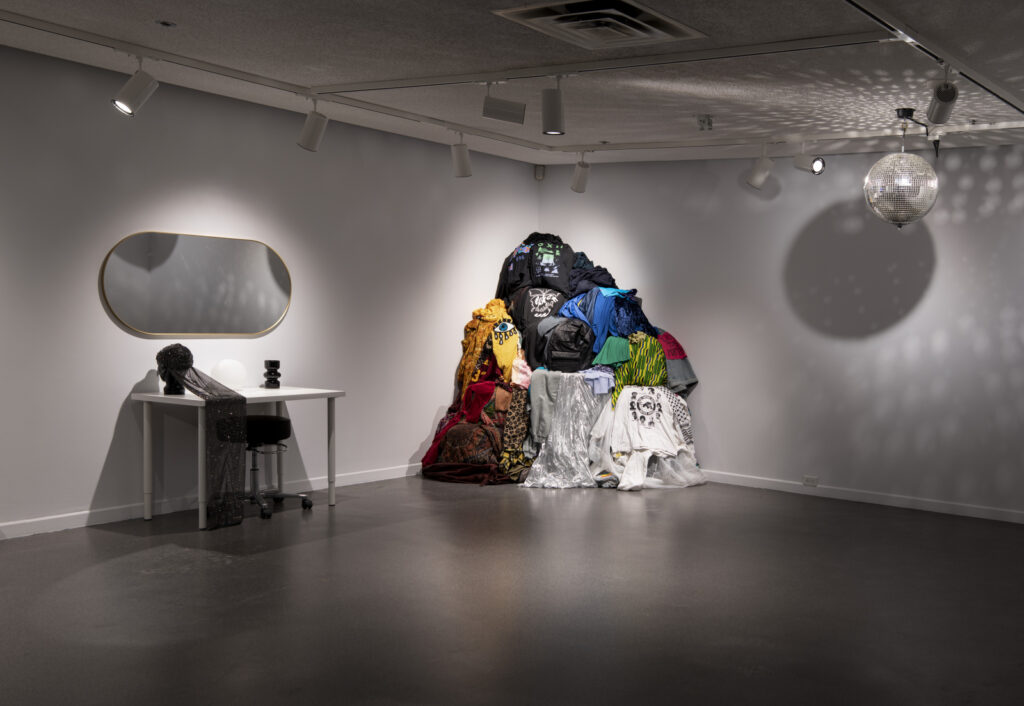
Clothes pile up in a corner—T-shirts, jackets, skirts, and other fabrics—seemingly tossed aside in the aftermath of a fashion montage you might see in a ’90s rom-com. Some bear Black Panther insignia, others are African kente; some fabrics are soft and diaphanous, others are black and metallic.
Beside the pile of clothes is a crisp white vanity, ready to serve the room’s occupant. A long black do-rag sits on a mannequin head, gemstones sparkling like the stars on the night out the occupant is preparing for. A tower of varied speakers sits in the other corner, filling the space with feel-good music as they get ready. A disco ball spins above, seeding its light across the textured ceiling.
The three mixed media installations by kay macdonald, titled in this room—at the beginning of the night/at the end of the world, transport viewers into an intimate space where preparation becomes a ritual and the bedroom becomes a liminal space of expression and safety. Here, the act of getting ready becomes a dance of “what it takes to show up, and to be seen,” macdonald writes.
Over the course of the exhibition, macdonald will periodically activate the space with a live performance, transforming the installation from still life to living ceremony.
BLACKNESS AS PERFORMANCE
Stepping out of that bedroom, your attention is immediately captured by a bright red curtain to the right.
Thick, red theatre curtains with carefully—almost reverently—placed pleats frame a painting, like curtains drawing closed after a show. In the centre, a dark-skinned Black woman rests after a dance of some kind. She is visibly tired, eyes downcast as she leans against her dressing table. Her red dancing shoes stand out in a sea of black, browns, and navy backstage.
By Preston Pavlis and titled when the jig is up, when the act is finished, when the curtain descends, the link between Blackness and performance in this piece feels unavoidable. The dancer’s red shoes are a reference to a 1948 British film The Red Shoes, where a ballerina must choose between her love for dance and her life beyond the stage.
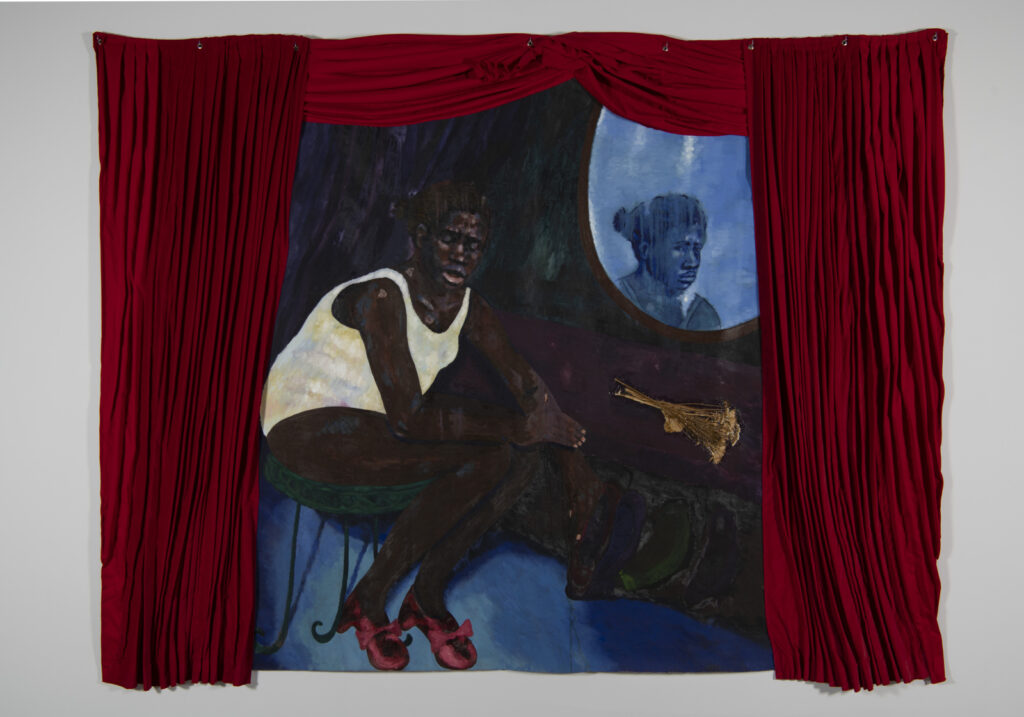
For me, a Black viewer, the red shoes in the painting symbolize a lack of choice. Just like the protagonist in the film couldn’t remove the shoes, Pavlis’s dancer cannot shed her Blackness. She is forced to perform every day on the stage we call life, eyes critiquing her every move. In the mirror behind her, the reflection stares at the viewer in an accusatory gaze, full of both helplessness and quiet rage.
Beside the dancer, a bunch of dried flowers rest on the table—a testament to how she has been unable to care for them, and herself. Tenderness, rest, the soft aspects of her life come second to the performance she must put on for the world. The painting is a moment of vulnerability, and the stage becomes a space where “endings, pressure and self-belief must be continually negotiated,” writes Pavlis.
CELEBRATION AS LIBERATION
As you venture deeper into the exhibition, a spread of black-and-white photographs lines the walls on either side of the room.
On the right side is Allen D. Crooks’s Lose yourself to dance,most of which was photographed during a fiftieth-anniversary family celebration and vow renewal at the East Preston Recreation Centre. The photos pull you into a room full of joy, laughter, and celebration. Glistening suits and well-worn floors set the scene, as family members—old and young, anonymous and identified—strut their stuff, skirts swaying with the music, arms raised in jubilation.
On the left side, a series of photographs that catch your eye are the Grange Road Dances. The photos depict scenes from social dances, house parties, concerts, and recitals in 1950s Canada. The black-and-white photos do nothing to dull the liveliness of the party.
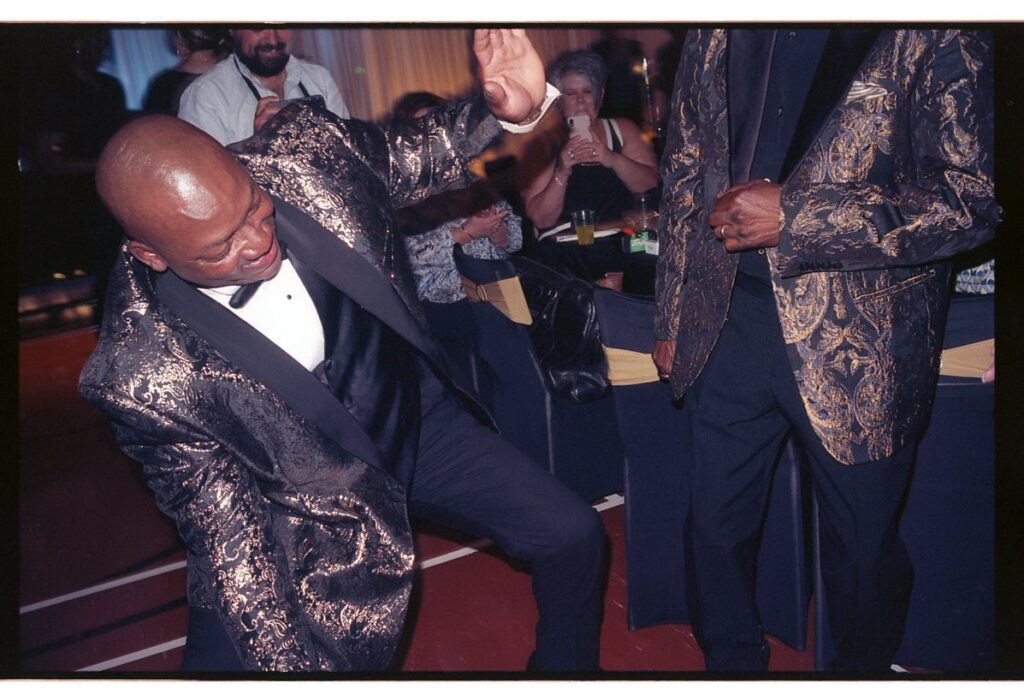
Gelatin silver darkroom prints and RA-4 colour darkroom prints. Photo: Steve Farmer.
In one of the photographs, a crowd of Black youth dance together, happily moving to the beat of musicians, while at the perimeter, a group of white attendees look on, seemingly out of place. I couldn’t help but smile at the sight of unapologetic Black joy existing despite white discomfort.
While both sides of the aisle depict different events, the theme is clear: Dance like no one’s watching.
In a world where Blackness puts a target on your back, dance becomes a radical form of liberation. This was especially true in the 1950s, when social dances were one of the few sources for “positive images of Canada’s Black population,” the exhibition text explains.
BLACK DANCE, DARK HISTORY
Moving through the gallery, it becomes clear that celebration is only one part of the story. Behind glass, objects from nineteenth-century minstrel shows sit uncomfortably still. A book on stage makeup is opened to instructions for racial caricature; beside it, a small tin of “Negro Black” face paint, with a detailed visual guide and colour palette to achieve the desired “ethnic complexions.”
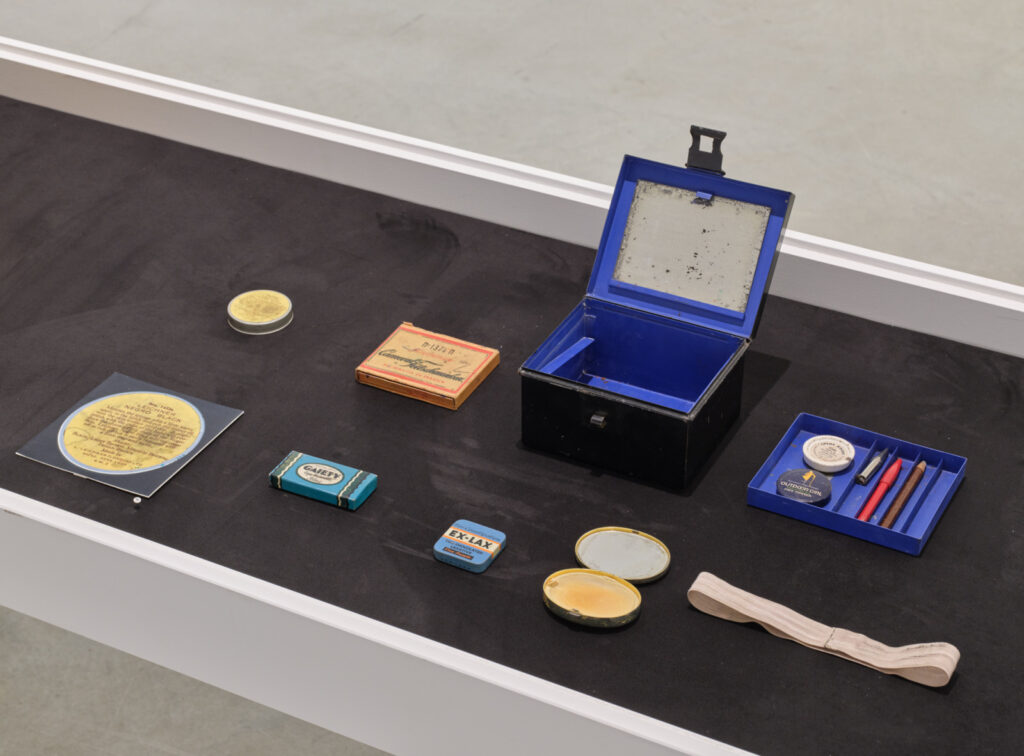
Flea Market Collection, Dance Collection Danse. Photo: Steve Farmer.
A visitor’s voice cuts through the gallery: “People used to buy this?”
The answer, painfully, is yes.
These materials remind viewers that dance has also been used as a tool for ridicule and exclusion—a distortion of Black and racialized bodies designed to entertain through dehumanization. That this history exists alongside scenes of joy, ceremony, and resistance is not a contradiction but part of the exhibition’s insistence on telling the whole story.
STILL BLACK, STILL DANCING
Just beyond this display, a small projection room offers another kind of history: short films and testimonials from dancers, neighbours, and students speaking about what dance has meant in their lives.
As archival footage and interviews flicker across the screen, the exhibition feels less like recorded history and more like something alive—an immortal rhythm carried forward through memory.
I sink into the cushions, the tension I carried from earlier leaving my body, as I watch Ethel Bruneau merrily “hoofing” along to the beat.
Indeed, it’s about time we had a show like this.
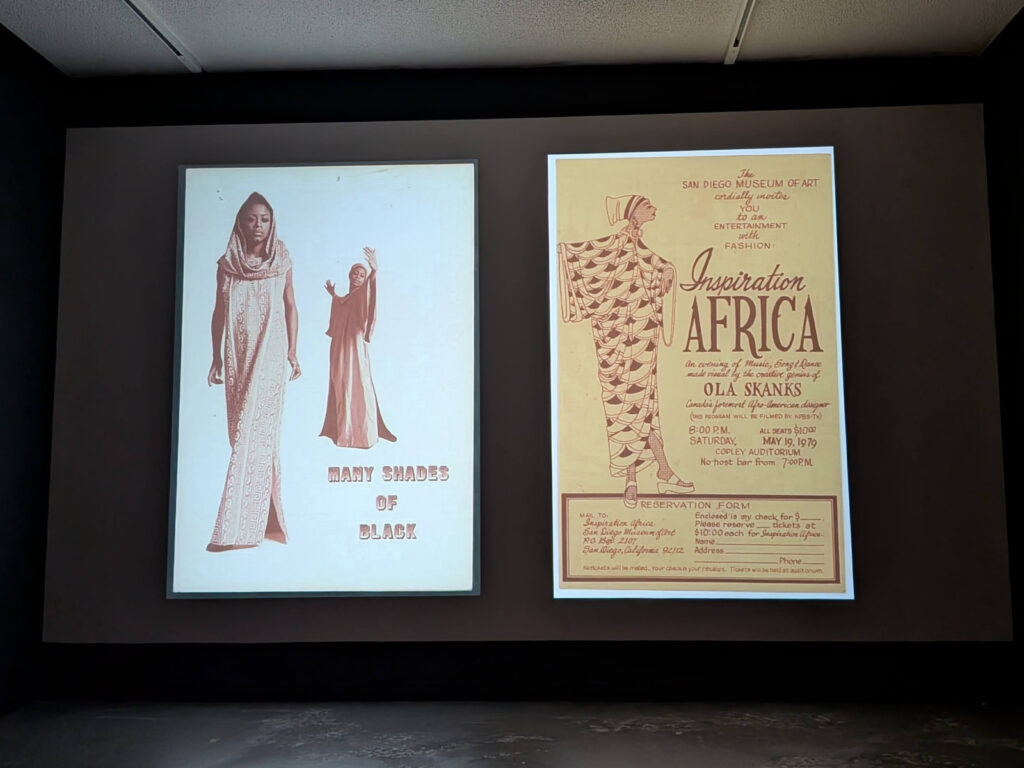
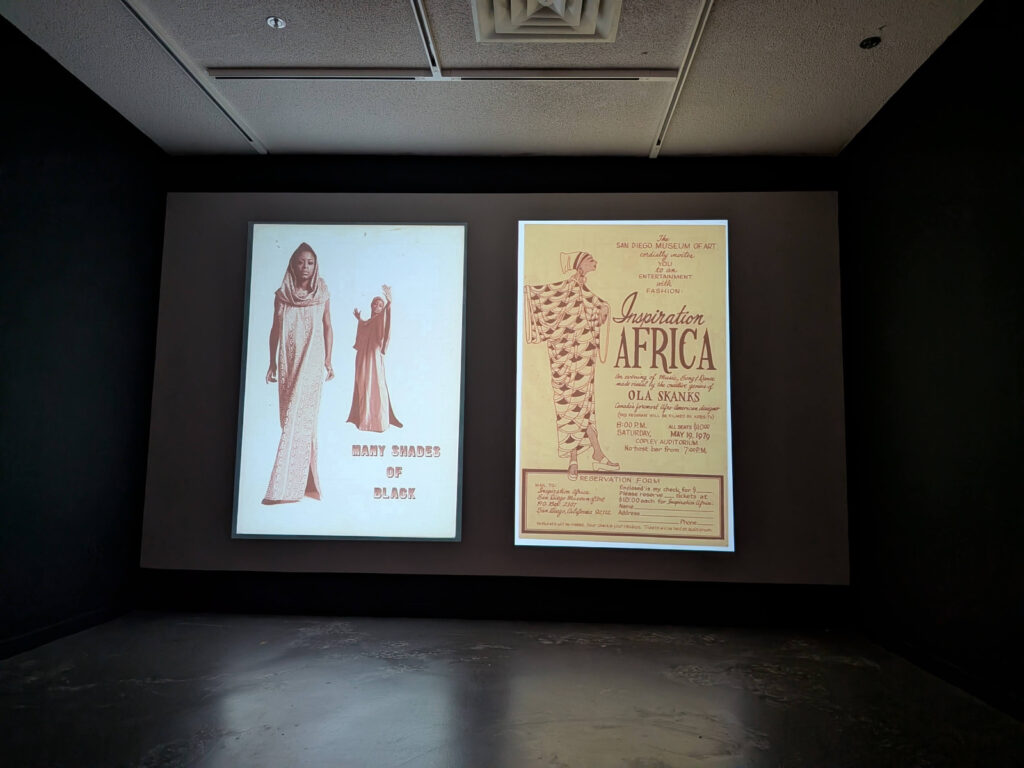 Ola Skanks, featured in Encore! Dance Hall of Fame Bio Shorts. Produced by Dance Collection Danse. Photo: Tosan Wumi.



Leave a Reply